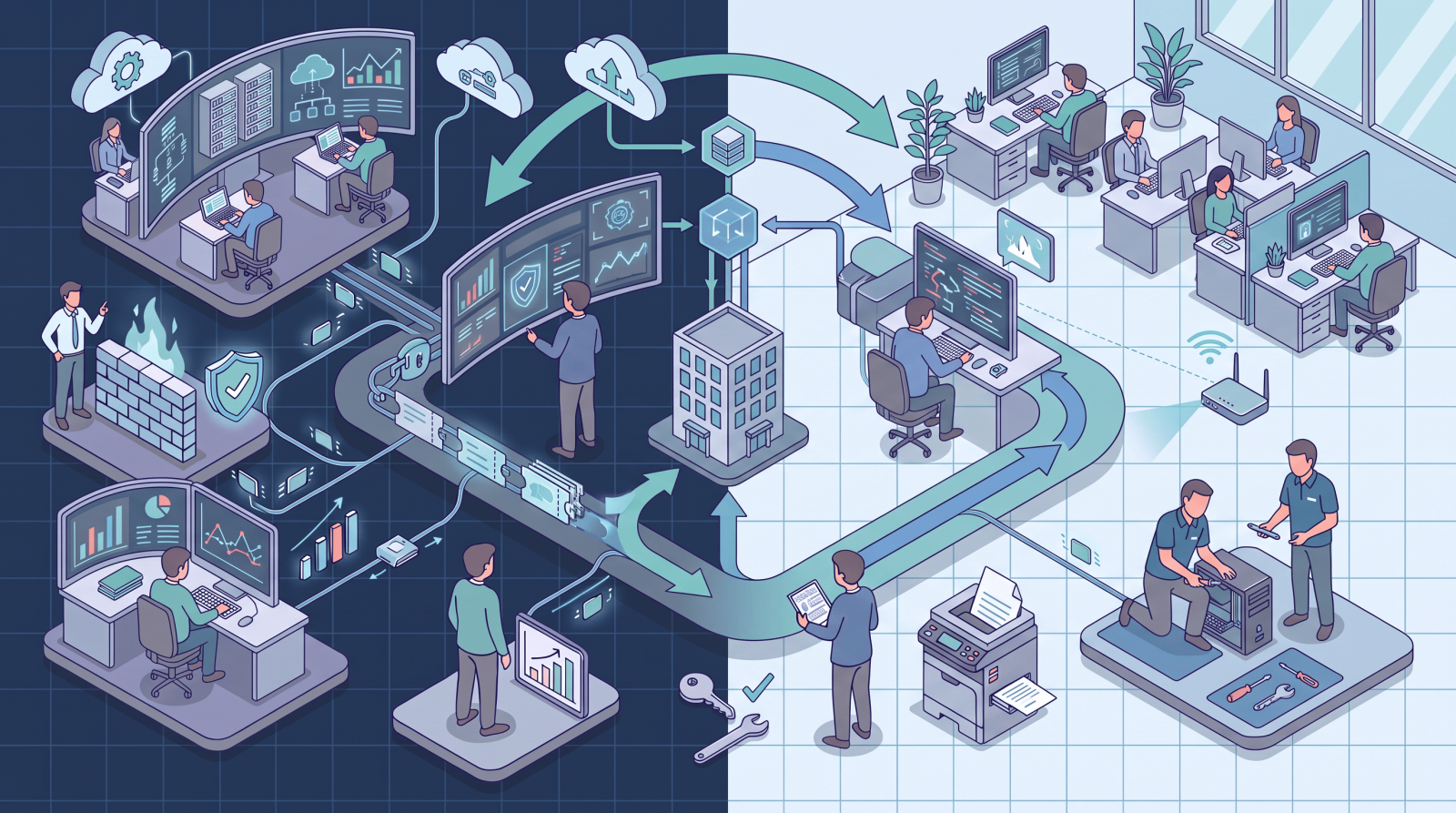
Many SME owners use "IT Support" and "IT Outsourcing" interchangeably, but they actually describe two distinct approaches to managing your technology. Understanding the difference will help you choose the right service for your needs and budget.
What Is IT Support
IT Support refers to reactive troubleshooting — fixing problems as they happen, such as a frozen computer, a printer that won't work, a dropped internet connection, or a system outage. It's typically an "on-call when something breaks" model, ideal for businesses that already have an internal IT team but need extra help occasionally.
What Is IT Outsourcing
IT Outsourcing, or Managed IT Services, means handing over the full responsibility of your IT infrastructure to an external provider instead of maintaining an in-house department. This covers Network, Server, Firewall, backups, and long-term system planning. It's a proactive model — your provider monitors system health and prevents problems before they occur, rather than just reacting to them.
Key Differences
- Scope: IT Support fixes isolated issues; IT Outsourcing manages your entire IT environment end-to-end.
- Approach: IT Support is reactive; IT Outsourcing is proactive, with clear SLAs and ongoing maintenance plans.
- Ownership: An IT Outsourcing partner acts as your dedicated IT department, not just a problem-fixer on call.
- Cost structure: IT Outsourcing is usually a fixed monthly fee, making budgeting far more predictable.
Which One Does Your Business Need
If you already have an IT team and just need occasional backup, IT Support is enough. But if you have no dedicated IT staff — or your current team can't keep up with a growing business — IT Outsourcing is the more cost-effective option. You get a full team of specialists managing your systems for less than the cost of a single full-time hire.
For SMEs and factories in Bangkok and Samut Prakan looking for a managed IT partner, HTI offers packages designed specifically for small-to-medium businesses, with clear SLAs from day one.